Rarity diesel hybrid: current models and function of the "economical" diesel

Gasoline engines with plug-in hybrid drive are now available in masses, but this technology would also be possible for diesel vehicles. But there is a contrary trend here, the selection of diesel hybrid vehicles is declining sharply. Manufacturers such as Volvo, Range Rover and also Audi or Peugeot had diesel plug-in hybrids in their range and have since parted with them. Only Mercedes continues to fly the flag for diesel hybrids. What is the reason for the diesel-hybrid death?
Which diesel hybrid models will be available in 2024?
The selection of diesel plug-in hybrids is very clear. Mercedes is the only manufacturer that currently still offers diesel plug-in hybrids. This justifiably raises the question of whether you want to buy an electric car or a plug-in hybrid. We have summarized the current models for you:

1. Mercedes E 300 de Estate Plug-in
A diesel hybrid is installed in the Mercedes E-Class station wagon. A 2.0-liter diesel works together with an electric motor and offers all-wheel drive. The diesel has an output of 194 hp and is supported by 122 electric hp. The total system output is a really good 306 hp and 700 Nm of maximum torque. Although the Estate weighs a good 2.2 tonnes, the sprint from 0 to 100 km/h is completed in six seconds. The top speed is 230 km/h.
If you always charge the electric motor well, you can travel about 45 kilometers purely electrically. The combined power consumption is 16.6 kWh. You usually drive long distances with a diesel – and this is also possible with the Mercedes E 300 de Diesel-Hybrid. Thanks to comfortable seats, air conditioning and a low noise level, you can drive very relaxed - and if you don't accelerate excessively on the motorway, you can benefit from the combination of diesel and electric and drive efficiently - but just don't overtake on the right!

2. Mercedes E 300 de Plug-in
If you don't need a station wagon, you can of course also purchase the Mercedes E-Class Sedan as a diesel plug-in hybrid. Some would say that Mercedes has a lot of courage to rely on diesel in this day and age, but it actually makes a lot of sense to offer the E-Class as a combination of electric and diesel. It is also questionable whether diesel leasing is still worthwhile. The advantage over gasoline engines with hybrid technology is that efficiency does not suffer as much on long distances because the diesel engine simply has less consumption.
Of course, the efficiency of the diesel plug-in also depends heavily on your own driving profile. If you swim along in traffic and charge the electric motor regularly, you can really save fuel with the Mercedes E 300 de Diesel Plug-in Hybrid and don't have to do without long distances - so nothing stands in the way of its use as a car for frequent drivers.

3. Mercedes GLE 350 de Plug-in
Despite a 400-kilogram electric motor, which is installed in addition to the diesel, you feel comfortable in the GLE Hybrid Diesel and have enough space. The battery capacity is 31.2 kWh and the purely electric range is a whopping 93 kilometres. That's what we call suitable for everyday use! If you only make commuter journeys with the GLE Plug-in Hybrid Diesel, you can always drive purely electrically – and if it is a longer distance, the share of the total distance is very large.
On average, the GLE has a consumption of 5.4 liters, which is really decent for a vehicle weighing 2.6 tons. Trailers of up to 3.5 tons can also be towed - actually the perfect all-rounder and a real insider tip. But if the GLE is too big or too expensive for you, we recommend our selection of excellent compact SUVs. But maybe leasing is also worthwhile for you?

4. Mercedes GLC 300 de Plug-in
The combination of diesel and electric in the GLC 300 de delivers a sporty 320 hp and 700 Nm of torque. The SUV, which weighs around 2.0 tonnes, accelerates from 0 to 100 km/h in 5.7 seconds and only stops at a top speed of 230 km/h. Of course, the Mercedes GLC Hybrid Diesel should preferably be driven in electric mode so that you get as close as possible to the zero CO2 emissions specified in the data sheet. However, there is still no CO2 bonus with the hybrid vehicle. You can travel around 40 kilometres with a full battery, which is perfectly sufficient for commuting.
After that, however, the GLC should be plugged in immediately so that the combustion engine is needed as rarely as possible. Unfortunately, however, the GLC hybrid diesel will not be able to do without it completely.
Why are there so few hybrid diesel models?
Most manufacturers have moved away from producing diesel plug-in hybrids in recent years. The main reason is that the production of diesel plug-in hybrid models is significantly more expensive than gasoline engines. Of course, this also means that a diesel hybrid model costs more to purchase than a comparable gasoline engine with hybrid drive. For this price difference to be really worthwhile, a high number of kilometers would have to be covered with the diesel, which only very few people can manage. Whether a diesel hybrid makes sense therefore depends heavily on your individual driving behavior.
The reason for the high production costs is the so-called exhaust gas aftertreatment, which is much more complex and therefore more expensive for diesel than for gasoline engines. This disadvantage outweighs the fact that you could save a lot more fuel with your diesel hybrid than with the combination of gasoline and electric drive. In addition, an additional electric motor could easily overcome the turbo lag in diesel. However, a full diesel particulate filter is also a problem that can occur in diesel hybrids.
If a blue sticker were to be introduced in the future, a diesel hybrid could become problematic.
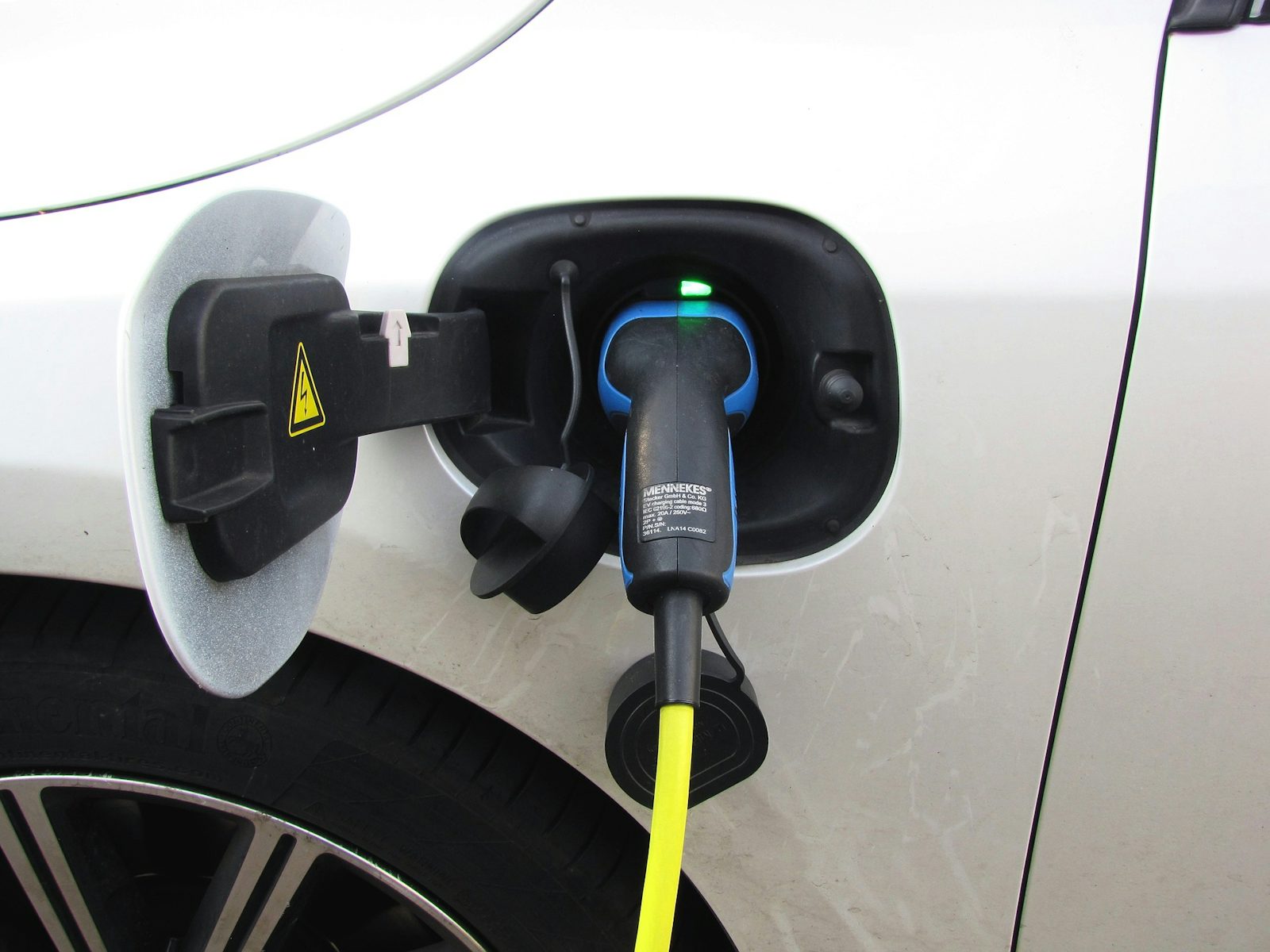
How does a plug-in hybrid diesel work?
The diesel plug-in hybrid is basically built in the same way as a gasoline hybrid. You drive with a combination of diesel engine and electric motor. Actually, this connection is even more obvious than the more common gasoline-electric combination, because the already quite fuel-efficient diesel is also combined with an electric drive, which makes the vehicle even more economical overall.
Most diesel hybrids have a purely electric range of around 45 kilometres. This means that you can be economical on the road, especially when driving short distances, if the electric driving mode is used. If you drive a lot on the highway or longer distances, the diesel hybrid is no longer economical either, because the high weight of the vehicle drives up consumption - which is no longer efficient with diesel at some point. Meanwhile, it is hoped that e-fuels will improve their environmental compatibility.
Which diesel plug-in hybrid models will be available in 2024?
As already described in the article, there is currently only one manufacturer left that produces diesel plug-in hybrid models. Mercedes will have the E-Class Estate, the E-Class Saloon, GLE and GLC as diesel plug-in hybrids in its range in 2024.
Which diesel mild hybrids are there?
Diesel mild hybrids are much more common than plug-in versions. Here, competitors BMW and Audi can also keep up again. Audi mild hybrids are used in a wide variety of diesel model versions. At BMW, mild hybrids are used, for example, to support the 320d or the X3 diesel.
Who produces diesel hybrids?
Until a few years ago, there were a few manufacturers who had a diesel hybrid in their range. Currently, only Mercedes still offers diesel hybrids.
Which is better: diesel hybrid or gasoline hybrid?
That depends on what your needs are. A diesel is always an advantage if you cover a high number of kilometers every year. For normal journeys of up to approx. 15,000 kilometres per year, a petrol engine is the better choice due to the lower vehicle tax. If your heart still beats for diesel, diesel leasing would also be possible.